Risc-v Cores and Neuromorphic Arrays Enable Scalable Digital Processors for EdgeAI Applications - Quantum Zeitgeist
Abstract
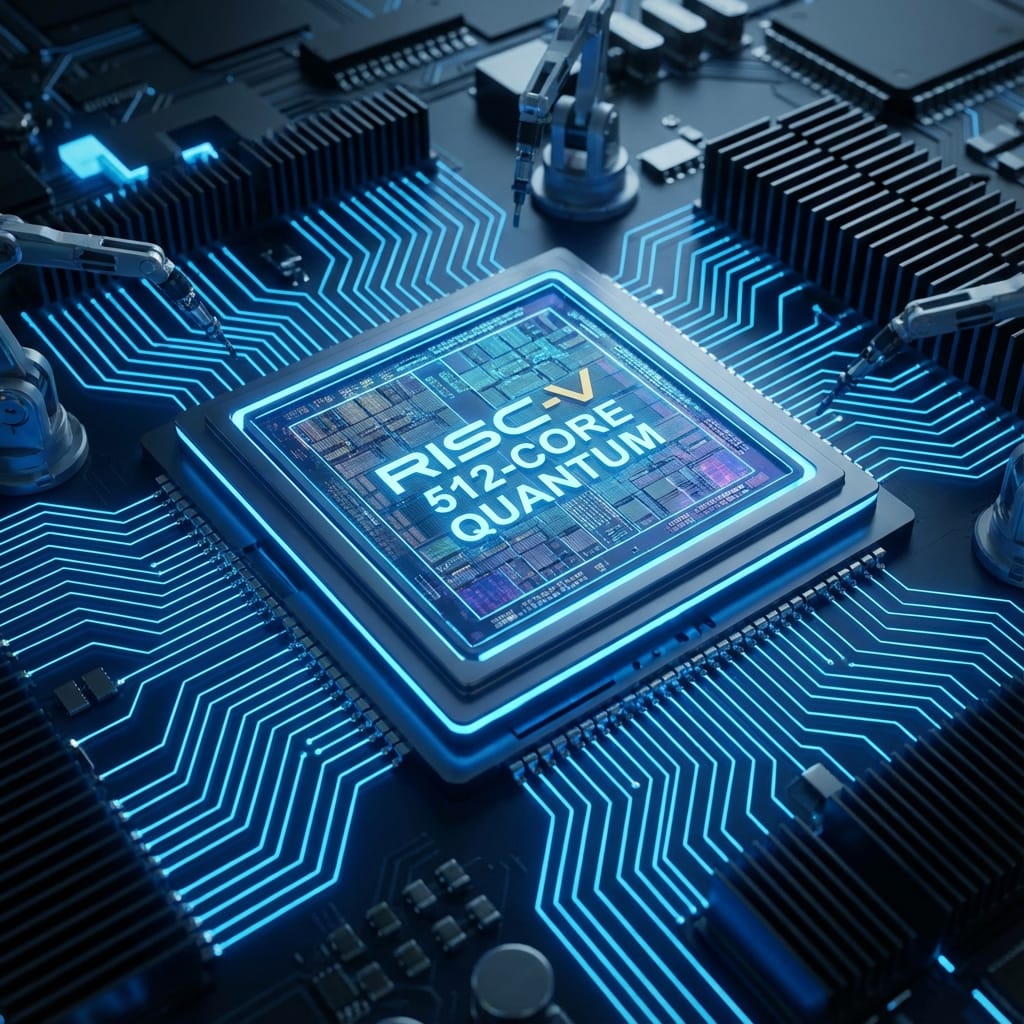
The research focuses on developing scalable digital processors for Edge AI by integrating flexible RISC-V cores with highly efficient neuromorphic computing arrays. This hybrid architecture leverages the strengths of both paradigms to achieve superior power efficiency and high throughput for running complex AI models locally. The resulting platform offers a robust, customizable solution to deploy demanding inference tasks directly onto resource-constrained edge devices.
Report
Key Highlights
- The core innovation is the integration of flexible, open-standard RISC-V cores with specialized neuromorphic arrays to form scalable digital processors.
- This architecture is specifically optimized for high-performance, energy-efficient execution of demanding Edge AI applications, such as real-time inference.
- The use of neuromorphic computing principles ensures superior efficiency (high operations per watt) compared to conventional CPU or GPU architectures.
- The processors are designed for modularity and scalability, allowing developers to tailor the ratio of general-purpose compute (RISC-V) to acceleration (neuromorphic arrays) based on workload requirements.
Technical Details
- Heterogeneous Design: RISC-V cores serve as the host processor, managing control flow, operating system tasks, and data scheduling.
- Neuromorphic Acceleration: The arrays handle highly parallel, low-precision computation critical for neural network operations (matrix multiplication, sparse activations), simulating synaptic weight storage and processing elements.
- Digital Implementation: The system utilizes fully digital implementations of neuromorphic principles, ensuring compatibility with standard CMOS fabrication processes and improving noise immunity compared to analog counterparts.
- Software Stack: The architecture necessitates a customized software stack that efficiently partitions and maps AI workloads between the RISC-V core and the specialized neuromorphic accelerator fabric.
Implications
- Reinforcing RISC-V's Role: This development confirms RISC-V's value as the customizable core platform for specialized heterogeneous computing, enabling tight integration with highly optimized, domain-specific accelerators.
- Revolutionizing Edge AI Performance: By addressing the fundamental power and thermal constraints, this technology unlocks the ability to deploy sophisticated, high-accuracy AI models (e.g., deep learning models) directly onto IoT and mobile devices.
- Driving Open Hardware Standards: The combination of an open ISA (RISC-V) with modular neuromorphic hardware components accelerates innovation and standardization in the field of custom AI hardware design.
Technical Deep Dive Available
This public summary covers the essentials. The Full Report contains exclusive architectural diagrams, performance audits, and deep-dive technical analysis reserved for our members.