Openterface KVM-GO – An ultra-compact KVM-over-USB solution with HDMI, DP, or VGA video input
Abstract
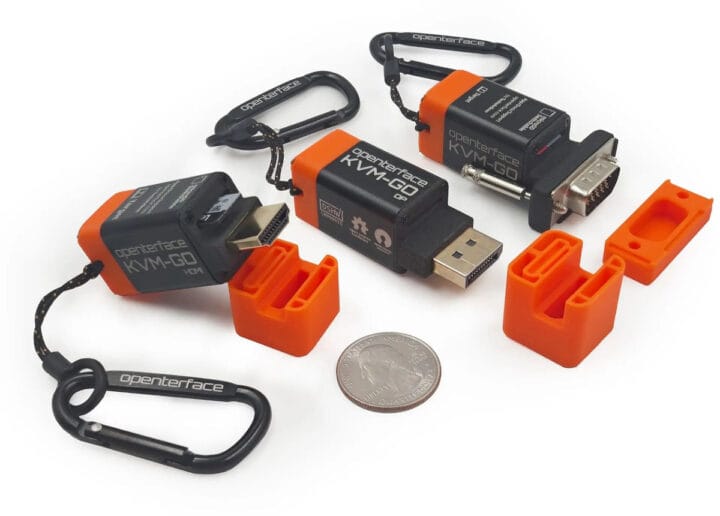
The Openterface KVM-GO is an ultra-compact, open-source KVM-over-USB solution designed for troubleshooting headless devices and remote server monitoring. This keychain-sized gadget, powered by a WCH CH32V208 RISC-V MCU, features interchangeable models supporting direct HDMI, DisplayPort, or VGA input up to 4K @ 60 Hz. It also includes a microSD slot for remote OS installation and provides deep access, including BIOS control, across major host operating systems via KVM-over-USB.
Report
Key Highlights
- Ultra-Compact Design: The device is small enough to fit on a keychain, weighing only 25 to 35 grams.
- KVM-over-USB: Offers KVM functionality via USB connection, contrasting with typical KVM-over-IP solutions.
- Versatile Video Input: Available in distinct models for direct HDMI, DisplayPort (DP), or VGA connection, eliminating the need for separate video cables on the target side.
- Open Source: Both the hardware design files and the host application software are open-source and available on GitHub.
- Target Accessibility: Allows direct access to the target device's BIOS for startup management and firmware updates.
- RISC-V Core: The device is built around the WCH CH32V208 RISC-V microcontroller.
Technical Details
- Microcontroller: WCH CH32V208 RISC-V MCU clocked at up to 144 MHz, supporting Bluetooth LE and USB 2.0.
- Video Capture Specs: Supports video input resolutions up to 4K @ 60 Hz.
- Storage: Includes a microSD card slot used for remote OS installation and facilitating file transfers.
- Connectivity: Features two USB 2.0 Type-C ports: one connects to the target device (via Type-A/C cable) and one connects to the host computer.
- Audio Capture: Capable of capturing audio via the HDMI or DisplayPort connections.
- Software Compatibility: Host applications are available for macOS, Windows, Linux, Android, and planned for iPadOS.
- Text Transfer Features: Supports sending text (usernames, code) from Host to Target via emulated keyboard strokes, and copying text from Target to Host using OCR (macOS functionality).
Implications
- Validation of RISC-V in Specialized Hardware: The use of the WCH CH32V208 demonstrates the increasing feasibility and adoption of RISC-V microcontrollers in highly focused, commercial-grade embedded networking and control products, particularly where low cost and performance are critical.
- Democratization of Headless Management: By offering a highly compact, cross-platform, and open-source KVM solution, the KVM-GO lowers the barrier to entry for developers and engineers needing deep access to headless devices (like Raspberry Pi or servers) without relying on more complex or expensive KVM-over-IP setups.
- Fostering Open Source Ecosystem: The release of hardware design and source code encourages innovation and community customization, accelerating the maturity of open hardware solutions in the server and embedded computing space. This open approach provides greater transparency and trust for professional debugging tools.
Technical Deep Dive Available
This public summary covers the essentials. The Full Report contains exclusive architectural diagrams, performance audits, and deep-dive technical analysis reserved for our members.