Bit-Brick Cluster K1 – A 4-slot RISC-V cluster board for SpacemiT K1-based SSOM-K1 system-on-module - CNX Software
Abstract
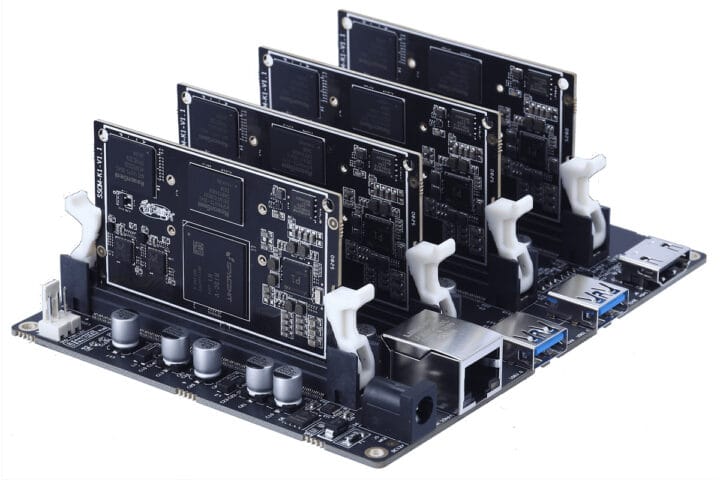
The Bit-Brick Cluster K1 is a new 4-slot RISC-V cluster board designed to utilize the SpacemiT K1-based SSOM-K1 system-on-module, enabling compact, multi-node computing. This platform facilitates the development and testing of parallel processing and distributed computing applications built upon the RISC-V architecture. The launch signifies a notable step in making scalable RISC-V cluster solutions more accessible to developers and researchers.
Report
Key Highlights
- The primary innovation is the Bit-Brick Cluster K1, a carrier board specifically engineered for multi-node RISC-V clustering.
- It features four dedicated slots to host the SpacemiT K1-based SSOM-K1 system-on-module (SOM).
- The platform aims to provide a compact and affordable solution for experimenting with parallel processing and distributed computing using RISC-V.
- This hardware enables the creation of small-scale computing clusters by linking multiple independent RISC-V processors.
Technical Details
- Processor Basis: Relies on the SpacemiT K1 RISC-V processor architecture, contained within the SSOM-K1 modules.
- Form Factor: Cluster board with support for four separate SOM nodes.
- Modularity: Requires the proprietary SSOM-K1 modules to function, acting as a modular infrastructure for scaling computational power.
- Target Use: Ideal for applications requiring shared memory access simulation, workload distribution, and network fabric testing in a controlled environment.
Implications
- RISC-V Ecosystem Growth: The Bit-Brick Cluster K1 validates the trend of RISC-V moving into more specialized and scalable hardware markets beyond traditional single-board computers (SBCs).
- Software Development Catalyst: Provides crucial hardware for developers to optimize RISC-V operating systems, parallel programming libraries (like MPI), and scheduling software for true multi-core/multi-node scenarios.
- Lowering Entry Barriers: By offering a standardized, compact cluster solution, it makes advanced parallel computing research more accessible to academic institutions and independent developers interested in the RISC-V instruction set.
Technical Deep Dive Available
This public summary covers the essentials. The Full Report contains exclusive architectural diagrams, performance audits, and deep-dive technical analysis reserved for our members.